



Porcelain Tile vs. Ceramic Tile — What’s the Difference?

Porcelain and ceramic tile are clay-based products that share visual similarities, but their manufacturing processes create noticeable differences in their absorption, construction, and application. South Florida’s climate adds another layer of complexity to the decision.
Choosing between porcelain and ceramic is easier once you learn where each material excels. This comparison guide covers composition differences, water resistance ratings, durability testing standards, cost considerations and room-by-room installation recommendations.
Composition and Manufacturing
Both types of tile have clay as their base material and rely on kiln firing. However, porcelain consists of a finer, denser, kaolin-rich clay mixture fired at significantly higher temperatures than ceramic. This intense heat, often combined with a longer firing time, fuses the materials. Vitrified, or glass-like, porcelain is dense, durable and less porous than ceramic, which uses a coarser clay mix and lower-temperature firing. Glazing porcelain and ceramic tiles adds variation, definition and protection.
Water Resistance
The American Society for Testing and Materials developed a testing method, ASTM C373, to measure how much water a tile absorbs. The American National Standards Institute uses that test as the basis for its tile classification standards, setting a water absorption of 0.5% or less as the threshold for a tile to qualify as impervious. Porcelain meets this threshold. Ceramic absorbs more water than porcelain, making it better suited for indoor applications.
The Porcelain Tile Certification Agency independently verifies that tiles meet the strict 0.5% water absorption threshold. When selecting porcelain tiles, look for thePTCA Certification Mark to determine if they fulfill this high standard.
Glazed surfaces on both tile types are waterproof. The distinction is in the tile body beneath the glaze. If water penetrates through a crack, chip or grout line, porcelain’s dense body resists absorption. Ceramic’s more porous body absorbs moisture more readily, which can lead to staining, molding or weakening in wet applications.
Durability
Porcelain tiles’ density makes them more resistant to chips, scratches, stains and foot traffic than ceramic tiles. Ceramic is appropriate for applications such as walls and low-traffic floors, but it’s less suitable for challenging conditions.
ASTM C1027 providesan abrasion classification system to measure the durability of glazed surfaces. A scale between zero and five evaluates how well a glazed tile resists visible surface wear. This classification indicates which tiles can handle specific traffic levels.
- Class 0 to 1: This rating is appropriate for light traffic, such as bathroom walls.
- Class 2: This rating is suitable for light residential traffic in areas where people typically wear socks or soft-soled shoes.
- Class 3: This rating handles moderate residential and light commercial traffic.
- Class 4: This rating withstands heavy residential and moderate commercial traffic.
- Class 5: This rating endures heavy commercial and industrial traffic.
Porcelain tiles perform well in Class 4 to 5 applications, thanks to their density and durability. Ceramic floor tiles typically fall in the Class 2 to 3 range for light-to-moderate residential use.
Porcelain’s vitrified body makes it naturally stain-resistant. Spills sit on the surface rather than absorbing into the tile, thus requiring less frequent cleaning and polishing. The material also withstands temperature fluctuations without cracking or warping, which is crucial for outdoor installations. Though both options are easy to clean, porcelain generally requires less maintenance than ceramic due to its lower porosity and higher stain resistance.

Cost and Installation
Material and installation costs vary based on tile size, quality and project complexity. Porcelain typically costs more up front because its installation is demanding for several specific reasons.
- Cutting: Porcelain is significantly harder and denser than ceramic tile. While you can sometimes score and snap ceramic tiles with a simple manual tile cutter, it is challenging to do so with porcelain without chipping or breaking the tile. A wet tile saw with a diamond blade is almost always necessary for clean, precise cuts.
- Bonding: Since porcelain doesn’t absorb water from the mortar like ceramic tile does, you need a special, polymer-modified thin-set specifically designed to bond to nonporous surfaces. The tiles can also come loose over time if you do not choose the correct adhesive.
- Handling: Porcelain’s density makes it heavier and more cumbersome to handle than ceramic tiles of the same size. Larger slabs often require two installers to position safely, which can increase labor costs.
- Maintaining:Lower long-term upkeep and replacement costs often offset porcelain’s higher up-front price tag. Its superior durability means it lasts longer and needs replacing less often in high-traffic areas.
Meanwhile, ceramic is usually affordable, DIY-friendly and easier to cut. The softer body allows for simpler cutting tools like an inexpensive score-and-snap cutter, which cleanly breaks the tile along a scored line without the need for a power saw. Plus, its porous nature readily absorbs moisture from thin-set mortar, creating a long-lasting and forgiving bond. That’s why ceramic is popular among homeowners who want to install backsplashes and accent walls themselves.
Appearance and Design
Ceramic and porcelain tiles are available in a wide range of styles, but their design strengths differ based on manufacturing capabilities and typical applications.

Porcelain Tile’s Versatility
Modern manufacturing techniques allow porcelain to capture fine details in various aesthetic themes.
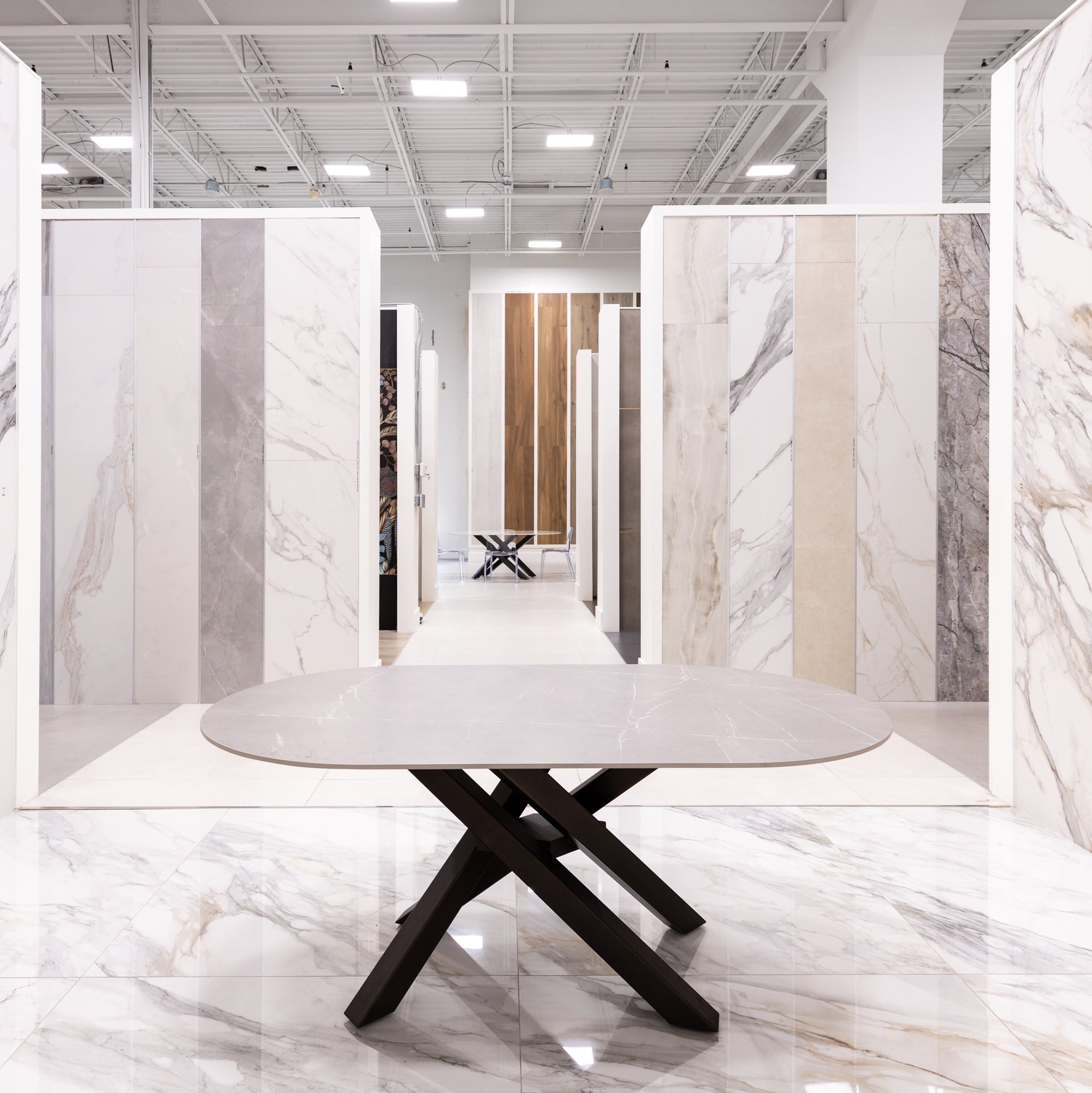
- Marble-look porcelain captures the veining patterns in Carrara marble, Calacatta or other classic stone varieties with remarkable accuracy. It’s compatible with luxury bathrooms, kitchen floors and entryway statements that need the elegance of natural marble without the maintenance.
- Stone-look porcelain replicates the organic textures of travertine, slate and rugged natural stone. These designs work well in outdoor patios, rustic interiors and accent walls with natural stone aesthetics.
- Concrete-look porcelain mimics the textured surface of hand-troweled concrete with subtle tonal shifts. It’s popular in contemporary kitchens, commercial spaces and bathrooms calling for industrial or minimalist aesthetics.
- Wood-look porcelain reproduces the grain detail in weathered oak or reclaimed barn wood. It's ideal for bathrooms, basements and kitchens that are more susceptible to moisture damage, which would ruin real hardwood.
Premium porcelain through-body construction ensures color and texture extend throughout the tile. Chips or cuts will reveal the same pattern as the surface, maintaining visual consistency despite damage. Not all porcelain offers this feature, but it’s available on select products designed for high-end installations.
Porcelain is available in various large-format sizes. Popular options include 24x48, 30x60, 35x71, 47x47, and 47x110 inch slabs. These large formats reduce the number of grout lines and can create an expansive appearance. They work particularly well in open-plan living areas, commercial lobbies and luxury bathrooms that benefit from uninterrupted surface area.
Ceramic Tile’s Decorative Range
Ceramic comes in many glazed colors, patterns and decorative finishes, often at a lower price point than porcelain. The glaze application process allows for vibrant hues, intricate geometric patterns and hand painted effects that work well in accent installations. Ceramic is well-suited for interior wall tiles, kitchen backsplashes and accent applications with lower performance requirements and a primary focus on visual impact.
The material excels in spaces prioritizing creativity and color over heavy-duty performance. Ceramic subway tiles, mosaic patterns and ornamental borders are ideal in circumstances that don’t require the water resistance and durability floor installations need. Ceramic's lower cost also makes it practical for larger accent walls or design features when budget is a concern or you prefer a DIY approach.
Texture and Feel
Porcelain and ceramic tile often look nearly identical in a photo or catalog listing, but they are noticeably different once you touch them. That’s why it’s best to experience these materials in person at a showroom. You will notice several tactile qualities that set these materials apart.
- Finish: Glazed porcelain and glazed ceramic feel similar because the glaze forms the surface layer on both. Unglazed porcelain has a fine-grained, dense texture often compared to natural stone. Ceramic wall tiles often have a thicker glaze, giving them a smoother, softer surface than unglazed porcelain.
- Density and temperature: Porcelain has a higher thermal mass than ceramic due to its density, which means it draws heat away from a surface faster and stays cooler to the touch. Outdoor porcelain installations in South Florida remain more temperate underfoot than ceramic would in the same conditions.
- Edge precision: A process called rectifying involves mechanically grinding high-quality porcelain tiles to precise, 90-degree angles, creating a sharp feel along the perimeter that allows for tighter grout joints during installation. Ceramic tiles are more likely to have pressed edges with a slight curve, which feels softer at the transition between tiles. Rectified edges aren’t exclusive to porcelain, and not every porcelain tile has this feature, but it's a typical upgrade on premium product lines.
Best Uses by Space
When you know which materials excel in different spaces, you can start matching performance to your project requirements.

Where to Use Porcelain Tile
Porcelain’s low water absorption and dense construction make it highly versatile.
- Indoor applications: Porcelain excels in bathroom floors, kitchen floors, entryways and hallways and commercial spaces. The material prevents moisture from penetrating the tile body, protecting against staining and mold growth in wet environments. Its density also resists scratching and chipping under heavy foot traffic.
- Outdoor applications: Porcelain is also an excellent choice for exterior patios, pool decks and outdoor living areas. The impervious body prevents water penetration, which causes cracking during freeze-thaw cycles. Porcelain tiles also don’t fade, degrade or crack in South Florida’s high year-round heat and humidity.
Where to Use Ceramic Tile
Ceramic performs well in applications with minimal moisture exposure where foot traffic doesn’t put significant stress on the surface, making it a cost-effective choice for interior walls, kitchen backsplashes, bathroom walls and low-traffic dry interior floors.
While ceramic tiles are not ideal for outdoor installations or high-moisture floor applications, budget-conscious projects benefit from the lower material and installation costs. When you’re tiling a large bathroom wall or creating an accent wall in a dining room, ceramic delivers attractive results without the expense of porcelain. The secret to success lies in matching the material to applications where its limitations don’t pose problems.
Porcelain Tile vs. Ceramic Tile — Which Should You Choose?
The right tile depends on where you’re using it and what you need it to do. The following comparison summarizes the key differences:
| Porcelain Tile | Ceramic Tile | |
| Best for | High-traffic floors, wet areas and outdoor spaces | Walls, backsplashes and low-traffic dry spaces |
| Water resistance | 0.5% or less absorption | Typically absorbs more than porcelain |
| Stain resistance | High. Its dense tile body repels spills. | Moderate. A glazed surface helps, but its tile body is more porous. |
| Durability | Higher. It has a denser, harder body. | Moderate. It’s softer, suited for walls. |
| Cost | Higher up-front investment | More budget-friendly |
| Installation | Requires professional expertise | More DIY-friendly |
| Maintenance | Lower. Spills sit on surfaces and wipe away quickly. | Higher. Its porous body absorbs stains more readily. |
| South Florida’s outdoors | Recommended | Not recommended |
Base your decision on your real-world project requirements instead of what looks good in a catalog. Porcelain is the better choice If you need water resistance, durability or outdoor capability. Ceramic works well if you have a tight budget and want to use it on indoor walls or in low-traffic areas.
Here are some questions to ask yourself:
- Will the tile get wet regularly?
- Is it going outdoors or in a high-humidity space?
- How much foot traffic will it handle daily?
- Are you comfortable with professional installation costs, or do you need a DIY-friendly option?
- Do you prioritize long-term durability over initial savings?
Visit Padron Flooring to Find Your Perfect Porcelain Tile
Padron Flooring has served South Florida for more than 40 years with premium porcelain tile collections curated for discerning homeowners, builders and designers. Our 30,000-square-foot showroom displays over 2,000 options across a wide range of looks, sizes and finishes.
We provide complimentary one-on-one design consultations to help you select the right tile for your specific project. Our team understands South Florida’s climate requirements and can guide you through performance considerations, aesthetic options and installation planning. We don’t perform installations, but we can provide resources to connect you with experienced installers.
To get started, book your complimentary appointment to tour our showroom or speak with a consultant. You can also call us at 561-969-3393.
