


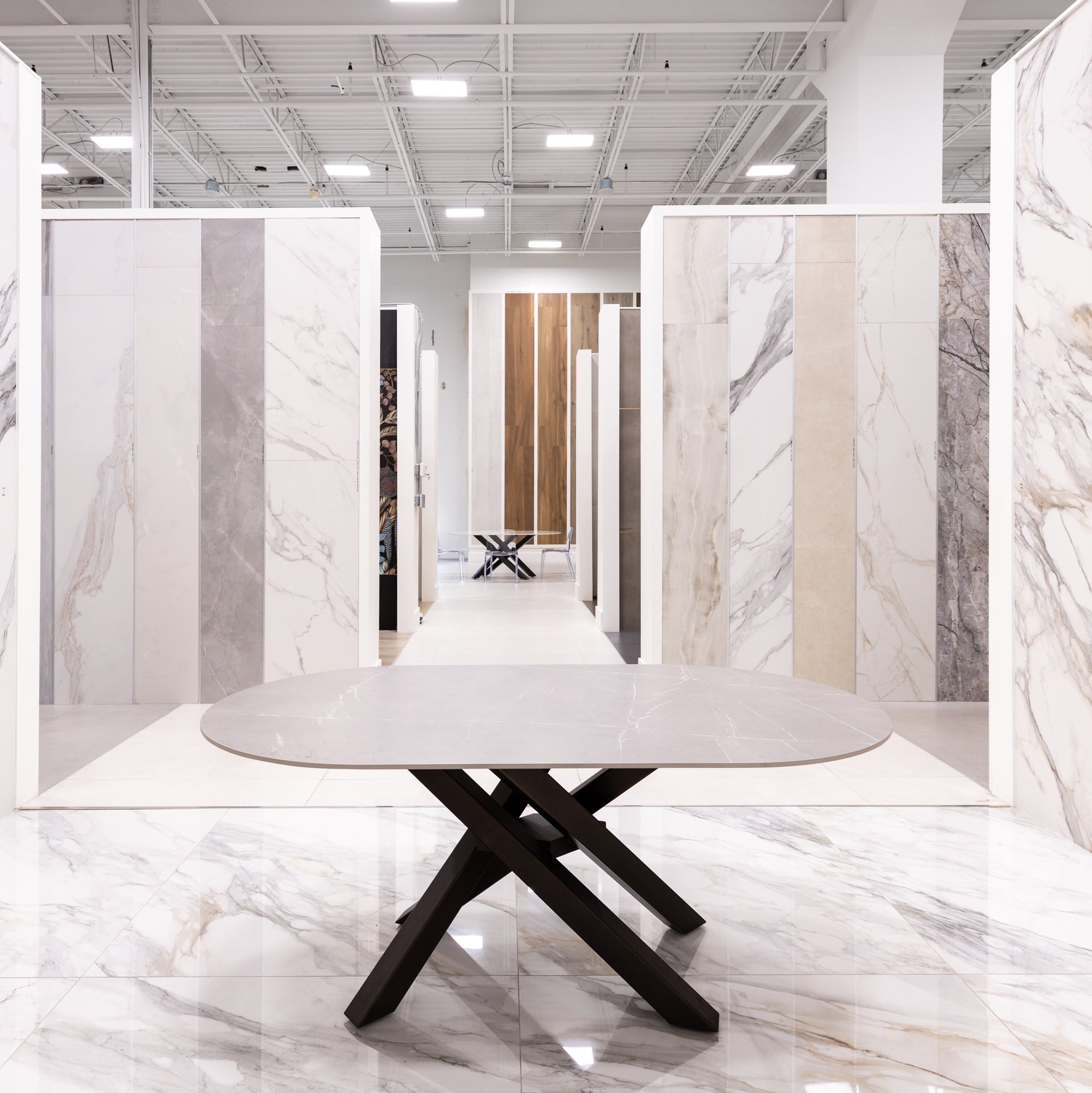


Tips For Choosing The Right Tiles
Tips for Choosing the Right Tiles
With countless colors, finishes and sizes available, choosing the right tile can feel overwhelming. It's easy to focus on appearance alone, but the right tile is the one that meets your space's performance demands. By understanding a few key technical properties, you can narrow your options and confidently choose the right floor tile that delivers lasting value, durability and style.
What to Look for When Choosing the Right Tile
Beautiful tile starts with the right foundation. Different rooms place different demands on porcelain tile:
-
Kitchens and entryways need durable surfaces that can handle frequent foot traffic, spills and daily cleaning.
-
Bathrooms, laundry rooms and mudrooms benefit from low water absorption and slip-resistant finishes that support safer everyday use.
-
Living rooms, bedrooms and open areas may allow more flexibility with polished, matte or wood-look porcelain styles, depending on the amount of traffic and the design effect you want to create.
-
Outdoor or transitional spaces require even more attention to surface texture, exposure and product suitability.
Before choosing a tile, consider how the room is used, how often it gets wet and how much maintenance you want to manage over time. Additionally, before comparing colors and patterns, evaluate the performance characteristics that determine how well porcelain tile will perform in your space.
Tip 1: Consider Durability
Porcelain tile is known for its exceptional strength, but not every product is designed for the same level of use. For glazed tiles, one of the easiest ways to compare durability is to checkthe Porcelain Enamel Institute (PEI) rating, which measures atile's resistance to surface wear. Each rating is based on a scale of 0 to 5, and is intended for different traffic levels:
-
PEI 2:Suitable for residential walls and low-traffic bathroom floors.
-
PEI 3:A good choice for most residential living spaces, including bedrooms, kitchens and family rooms.
-
PEI 4:Designed for busy residential areas and many light commercial applications.
-
PEI 5:Built for heavy residential use and demanding commercial environments with consistent foot traffic.
For unglazed porcelain tiles, which do not have a PEI rating, durability is measured by Deep Abrasion Resistance,tested via ASTM C501 or ISO equivalents. This calculates the volume of material lost when ground down by an abrasive wheel. High-quality unglazed porcelain typically allows a maximum wear volume of 175 mm³ or lower. Water absorption must be 0.5% or less to legally qualify as true porcelain. Because unglazed porcelain is consistent throughout, minor surface wear does not reveal a different color or material beneath.
The Mohs hardness scale offers another useful measure. Instead of wear resistance, it evaluates how well a tile resists scratching. Porcelain scores between 7 and 8 out of 10. This higher Mohs rating generally performs better in areas where dirt, sand and frequent traffic can wear the surface over time.
Together, the PEI and Mohs ratings offer a practical picture of how porcelain tile will perform throughout your home.
Tip 2: Match Tile Porosity

Porcelain's low water absorption is one of its greatest advantages. Porcelain tiles absorb 0.5% or less water, making them among the least porous flooring materials available. This low absorption rate helps prevent moisture from penetrating the tile, making porcelain a good option for bathrooms, kitchens, laundry rooms, mudrooms and other wet areas.
Porcelain also does not require sealing, offering a clear maintenance advantage. Spills remain on the tile surface rather than soaking into the material. Simpler cleaning and stain reduction are reassuring for homeowners who prioritize long-term performance with minimal upkeep.
Tip 3: Prioritize Slip Resistance
Safety should be part of every tile decision, especially in areas where water is present. Always evaluate slip resistance based on your room's intended use rather than appearance alone.
Modern porcelain tile uses the dynamic coefficient of friction (DCOF) to measure slip resistance in wet or commercial areas, with a standard of ≥ 0.42 for wet floors. The benchmark is outlined in ANSI A326.3, which helps manufacturers classify tiles intended for level interior spaces that may become wet. Many customers also look for R ratings, which are based on the DIN 51130 standard for ramp testing. R ratings classify slip resistance:
- R9: Low slip resistance — safe for dry indoor spaces like bedrooms and living rooms.
- R10: Moderate slip resistance — ideal for residential kitchens and indoor bathrooms.
- R11: Good slip resistance — built for outdoor patios, walkways and wet pool decks.
- R12 to R13: High-to-extreme grip — made for commercial kitchens, ramps or industrial areas.
Bathrooms, laundry rooms and commercial entrances often benefit from tiles that meet or exceed this threshold. Dry living areas, dining rooms and bedrooms typically have different performance requirements because standing water is uncommon.
Shower floors deserve special attention. Smaller porcelain mosaics provide more grout joints, which improve underfoot traction. Combining the right tile size with an appropriate slip-resistant surface creates a safer shower without sacrificing style.
Tip 4: Choose the Right Tile Size
Tile size influences how a room looks and feels. The right format can make a compact room appear larger or help create a balanced visual layout in expansive areas.
Larger porcelain tiles, 24x48 and larger, create clean sight lines with fewer grout joints. They work well in open-plan living areas, kitchens, dining rooms and spacious bathrooms where a seamless appearance works well. Medium-sized tiles offer flexibility across many rooms and work well where layouts include multiple corners, cabinetry or architectural features.
Wood-look porcelain planks create a natural hardwood appearance and visually extend a room. These features make them popular for use in living rooms, hallways, bedrooms and open-concept spaces.
Tip 5: Guide Design Vision With Finish and Look
When you have covered the performance requirements, design becomes the final decision-making layer. Porcelain offers exceptional versatility through marble-, stone-, wood-, decorative- and cement-look finishes. This lets you achieve almost any design style while maintaining the porcelain's practical performance.
Finish also affects how a room feels. Polished surfaces reflect more natural and artificial light, helping brighten larger spaces and creating an elegant appearance. Matte finishes soften glare while providing a more natural, understated aesthetic. Textured finishes often improve traction while adding visual depth.
Lighting changes throughout the day, and showroom lighting differs from natural daylight. Viewing tile samples in person under different lighting conditions gives you a more accurate understanding of color, texture and finish before making a final decision.
Put These Tips Into Practice Before You Buy
Technical ratings give you a strong starting point, but tile remains a visual and tactile product. Surface texture, finish, color variation and scale are much easier to evaluate in person than on a screen alone.
A showroom visit allows you to compare tiles side by side, examine larger displays and see how different finishes respond to changing light. It also gives you the opportunity to discuss your needs with an experienced flooring professional who can recommend products that balance performance, maintenance and design.
Bringing room measurements, cabinet samples, paint colors or inspiration photos can make the selection process even more productive.
Find the Perfect Tile at Padron Flooring
Choosing the right porcelain tile starts with understanding how each product will perform. Evaluating PEI ratings, Mohs hardness, slip resistance and finish helps you select flooring that suits both your lifestyle and design goals.
At Padron Flooring, our team has helped customers navigate every step of the tile selection process for over 40 years. From high-performance porcelain to realistic wood-look tiles, we can help you compare options, answer technical questions and find products that fit your project. We offer complimentary one-on-one design appointments and welcome walk-ins.
Book your design appointment today, or call us at 561-786-2872.
