


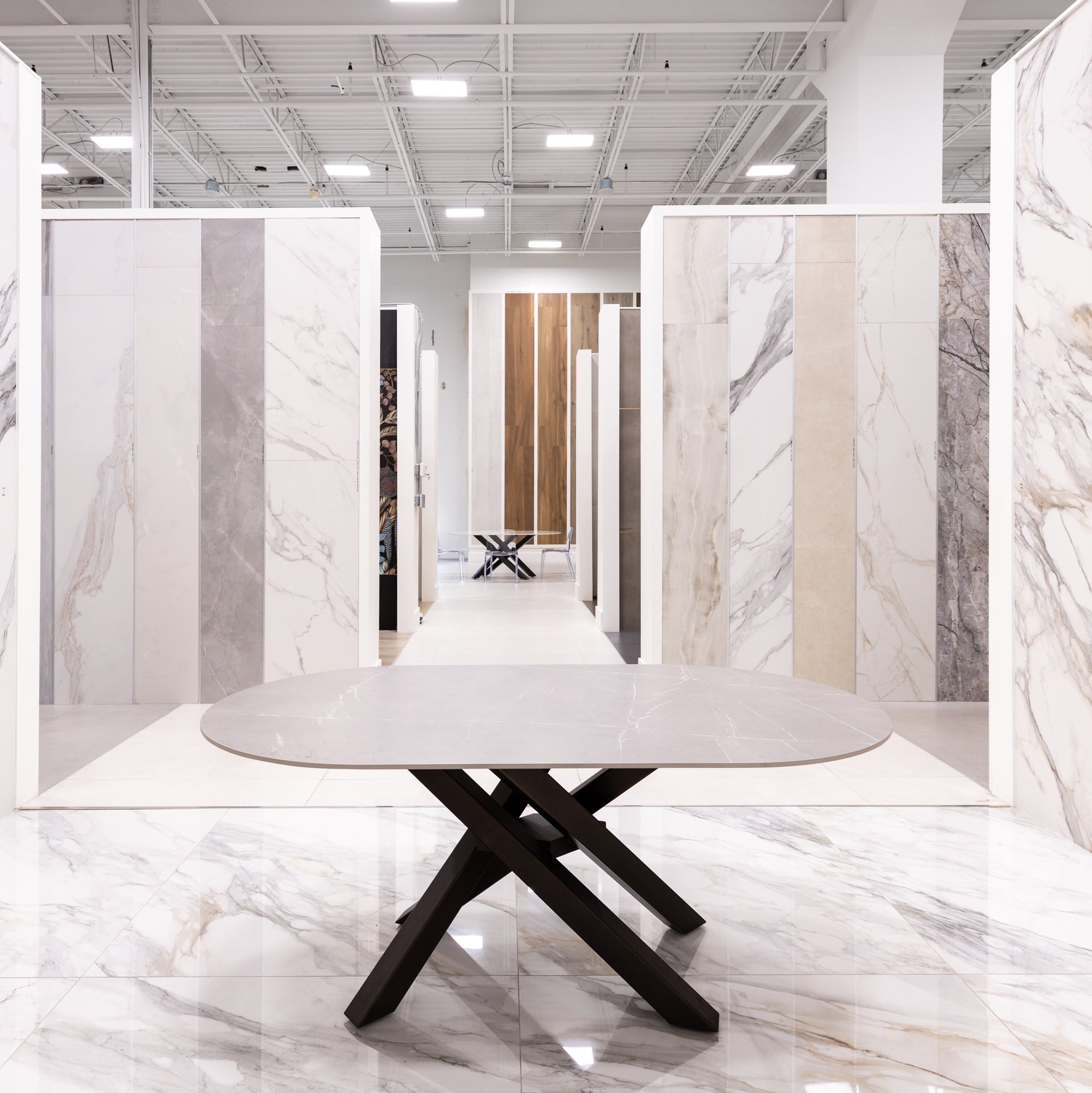


Different Types Of Tiles

Renovating your home with new tile opens the door to endless design possibilities. With so many materials, finishes, colors, and formats to explore, finding the perfect tile for your space can sometimes feel overwhelming. More than half of homeowners in the U.S.planned renovation projects in 2025, and many face the same question. How do you choose a tile that looks beautiful in the showroom and performs well in your home?
We're here to help you find durable, refined surfaces that support your aesthetic vision. This guide breaks down the different types of floor tiles, how they differ and where each one works best.
Ceramic Tile
Ceramic tile is crafted from natural clay, then shaped, glazed and fired at high temperatures. It works well in many interior applications and offers reliable performance at an approachable price point.
Because ceramic is more porous than porcelain, it performs best in dry areas such as kitchen backsplashes, bathroom walls and interior accent walls. It’s also easier to cut than denser materials, making it useful for projects with intricate layouts or custom patterns.
Most ceramic tile has a glazed surface available in various colors, patterns and finishes, giving homeowners flexibility in spaces where moisture exposure and foot traffic are relatively limited.
Porcelain Tile
Porcelain tile is a type of ceramic tile, but it’s made with finer clay and fired at higher temperatures. This process creates a surface that is harder, denser and less porous than ceramic. Porcelain is also a leading tile choice, accounting for 50.78% of theglobal ceramic tile market share in 2025.
Porcelain has a low water absorption rate of0.5% or less under ASTM C373, making it resistant to moisture and stains. It's a reliable choice for applications such as:
- Kitchens:Porcelain stands up to everyday spills, warm cookware and steady foot traffic while maintaining its polished look.
- Bathrooms: Its low water absorption makes it a strong choice for shower floors, tub surrounds and vanity areas.
- Entryways: Durable porcelain handles daily foot traffic and moisture tracked in from outside.
- Patios and pool areas:Outdoor-rated porcelain withstands temperature and moisture changes, making it a reliable option for exterior spaces.
- Commercial floors: Dense porcelain performs well in busy environments where durability, longevity and refined style all matter.
One of porcelain’s greatest strengths is its design versatility. Modern manufacturing allows it to capture the look of natural stone and concrete and other sought-after materials with impressive detail. Whether you’re drawn to the look of stone or the refined veining of Italian marble, porcelain can deliver the aesthetic you want with the durability and low-maintenance performance homeowners value.
Browse ourfull porcelain collection to see the range available.
How Porcelain Differs From Ceramic
The difference between porcelain and ceramic comes down to three factors:
- Firing temperature: Porcelain is fired at high temperatures, creating a denser, harder tile. Ceramics, on the other hand, are fired at lower temperatures, which makes the tile softer and more porous.
- Water absorption: Porcelain is virtually water-resistant. Ceramic has higher absorption, making it more vulnerable in wet environments.
- Application range: Porcelain suits high-traffic areas, wet environments and outdoor spaces. Ceramic performs well on walls, backsplashes and dry indoor floors.
Natural Stone Tile
Natural stone tile is made from rock quarried from the earth and includes materials such as marble, travertine, granite, limestone and slate. Each piece has its own natural variation, giving stone an organic, one-of-a-kind character that manufactured materials are designed to emulate.
Natural stone can bring timeless beauty to bathrooms, kitchens, feature walls and other upscale interiors. Each material has its own character, from the distinctive veining of marble and the soft texture of travertine to the depth of granite, the warm neutrality of limestone and the rich, slip-resistant surface of slate.
Because stone is porous, it needs regular sealing to help protect it against staining. It can also be heavier and more expensive than porcelain, which may affect your project budget and the installation process.

For homeowners who want a similar visual effect with less upkeep,porcelain stone-look tiles offer a refined alternative.
Glass Tile
Glass tile is made by coating glass pieces with pigment and firing them to create a luminous, reflective surface. Its reflective quality can brighten a room, add dimension and make smaller spaces feel more open.
Glass tile repels water, mold and staining while staying completely nonporous. It also resists odors, making it a strong option for backsplashes, accent walls and bathroom walls. Glass works best on vertical surfaces. If you use glass tile on floors, choose small-format tiles or mosaics to help improve traction.
Glass can show dirt and marks more easily than matte surfaces and requires careful handling during installation. Mosaic formats, often set on mesh backing, arepopular for showers and decorative accents.
How to Choose the Right Tile for Your Space
Choosing the right tile comes down to understanding where it's going and how it will be used. Consider these factors:
- Application: Determine where you want to use the tile. Floor tiles need more durability and slip resistance.
- Traffic level: High-traffic areas demand more resilient materials.
- Moisture exposure: Wet areas require tiles with low water absorption.
- Indoor vs. outdoor: Outdoor applications need frost-resistant materials.
- Finish: Matte finishes offer slip resistance for floors. Glossy finishes reflect light well on walls but can be slippery.
For outdoor applications, porcelain is the reliable choice. Focus on how the tile will perform in your specific space first, then narrow down your aesthetic choices from materials that meet those requirements.
Why the Difference Between Floor Tile and Wall Tile Matters
Floor-rated and wall-only tiles have different structural requirements. Floor tiles need to be thicker and built to handle the weight and impact of foot traffic. Wall tiles can be thinner and lighter since they don't face those demands, but that also means they won't hold up on floors.
The rule is simple. You can put a floor tile on a wall, but you can’t put a wall tile on a floor. When selecting floor tiles for high-traffic areas, look at PEI ratings. These ratings tell you how well a glazed tile resists surface wear from abrasion. Higher numbers mean better durability. Floor tiles in busy areas should have higher PEI ratings than tiles meant for walls or low-traffic zones.
Frequently Asked Questions About Tile Types
Still have questions? Here are answers tocommon questions that homeowners ask when starting a tile project.
What is the difference between glazed and unglazed tile?
Glazed tile has a liquid glass coating applied before final firing, creating a protective surface that's nonporous and stain-resistant. PEI ratings apply to glazed tiles.
Unglazed tile has no surface coating. Color and texture run throughout the tile, producing a natural, matte appearance. Unglazed tile is more slip-resistant, but it's also more porous and may require sealing.
What tile size should I choose?
Choose a tile size based on your room’s dimensions, layout and how the surface will be used. Larger tiles create fewer grout lines, which can help a space feel more open. Smaller tiles can work well in compact areas or wet spaces, where the added grout lines can help improve traction.
Visiting a showroom is a good way tosee different tile sizes at scale before making a decision.
What is the best way to clean tile?
The best way to clean tile is to sweep regularly and damp mop with a pH-neutral cleaner. Sweeping removes dirt that can scratch the surface, while gentle mopping keeps the tile clean without damaging the finish.
Porcelain is especially low-maintenance because of its dense surface. Natural stone typically needs periodic sealing to help protect it from staining.
Can all types of tile be used outdoors?
Not all tile types are rated for outdoor use. Porcelain is the standout choice. Its water absorption rate of 0.5% or less, measured by ASTM C373, helps make this type of tile a strong option for outdoor spaces such as patios, pool surrounds and exterior walls. For freeze-thaw climates, confirm the specific tile is manufacturer-rated for exterior use.
Ceramic is better suited to dry indoor environments. Its higher porosity can cause cracking when temperatures drop. Natural stone can work outdoors but requires regular sealing. Glass tile is not recommended for outdoor floors. Explore ouroutdoor-rated porcelain options.
Find Your Perfect Porcelain Tile With Padron Flooring
At Padron Flooring, we’ve been helping South Florida homeowners, designers and builders find exceptional tile since 1979. Our specialty is porcelain, one of the most versatile and enduring tile options available. Our 30,000-square-foot showroom showcases one of the region’s most extensive curated porcelain collections.
We offer complimentary design consultations with experts who understand both South Florida aesthetics and the technical demands of your project. Appointments are highly suggested, though walk-ins are always welcome.
Book a complimentary design appointment by calling 561-786-2872, explore our30,000-square-foot showroom or browse ourfull porcelain tile collection to start envisioning your space.
